Skip to Content Skip to Footer
Delaware Wic Site Logo
  • Breastfeeding
  • Nutrition Education
    • Nutrition Education
      Women
    • Nutrition Education
      Infants
    • Nutrition Education
      Children
    • Nutrition Education
      Fathers
  • Want to Learn More?
  • English
    • Español
    • Kreyòl

1 to 1½ Years

  • Home
  • Nutrition Education
  • Children
  • 1 – 1.5 Year Old
  • Introduction
  • Breakfast
  • Lunch
  • Snack
  • Dinner
  • Daily Suggested Food Group Amounts
  • Look what I can do!
  • Keep Me Safe and Healthy

I’m ready to learn how to eat most of the foods you do.

I need your help to learn how to be a good eater and DO IT BY MYSELF!

WHAT

  • Offer small servings of several foods that are easy for me to eat.
  • I need soft, tender, and moist foods like cooked vegetables and soft fruits.
  • I still love to come to the breast to breastfeed but expressed breast milk in a cup is great too!

HOW

  • Offer me foods from a small plate or bowl.
  • I want to choose if I use my fingers or my spoon. Please be patient if I am messy.
  • Cut my food into small, bite-sized pieces no bigger than your thumbnail.

WHEN

  • I do best with 3 meals (breakfast, lunch, dinner) and 2 or 3 snacks. Let’s eat at the same times every day.
  • I only need water between meals and snacks. This way I will be hungry – but not too hungry – when it is time for the next meal or snack.

WHERE

  • Eat with me. I need your help and I learn a lot during family meals. Our time together is special. I feel so loved when you pay attention to me.
  • Let me eat at the table with everyone else. I need to be safe, sitting up, supported, and buckled in a highchair.
Let me decide which and how much of the foods you offer.
Please don’t force me to eat more or less than I want.

Here are some examples of what meal and snack portion sizes might look like on my plate.

Breakfast

¼ cup diced kiwi

Plate of breakfast meal

½ slice, cut up whole grain toast

½ cooked, cut up egg

½ cup breast milk or whole milk

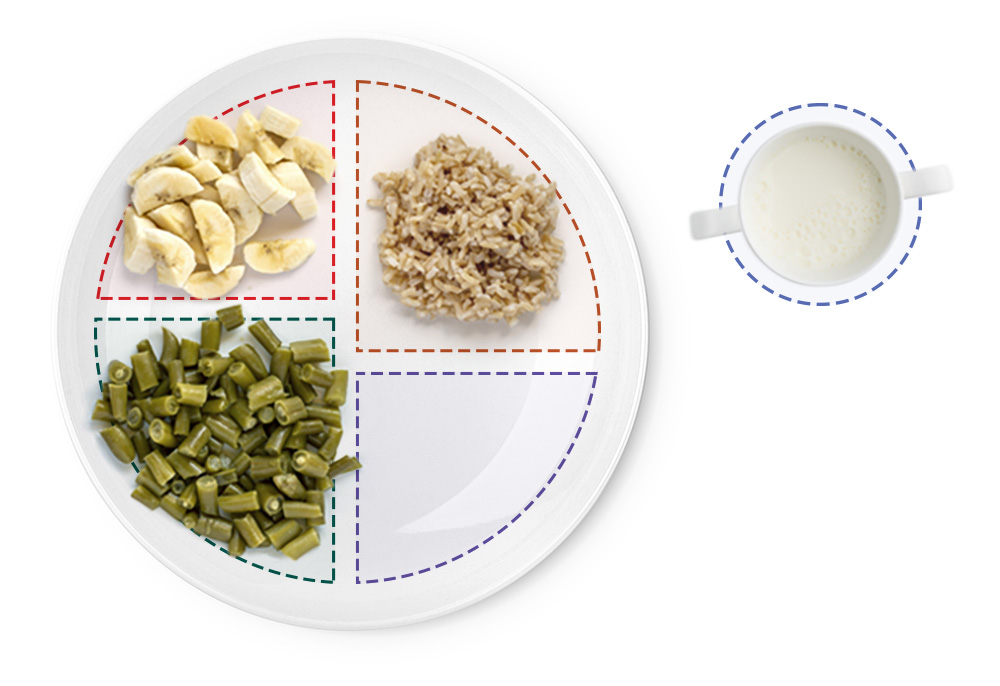
Lunch

½ medium, sliced banana

½ cup cooked, chopped green beans

Plate of lunch meal

¼ cup cooked brown rice

½ cup breast milk or whole milk

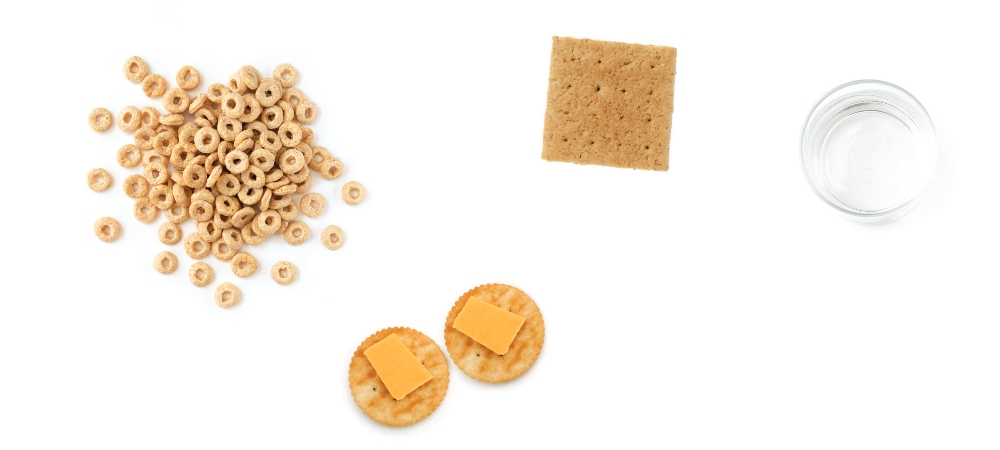
Snacks

Plate of snack meal

½ cup dry cereal

2 to 3 whole grain crackers with cheese

½ graham cracker

water between meals and snacks

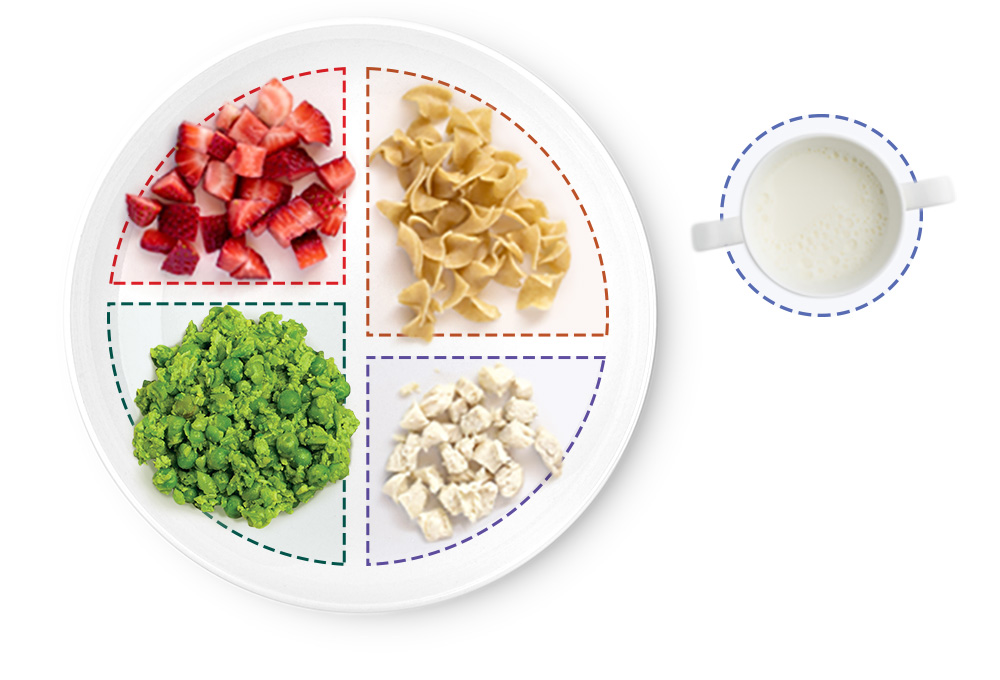
Dinner

¼ cup diced strawberries

½ cup mashed peas

Plate of dinner meal

¼ cup cooked whole grain pasta

2 tablespoons baked, chopped chicken

½ cup breast milk or whole milk

Daily Suggested Food Group Amounts

FRUITS

2 servings a day
1 serving = ½ cup
(1 cup total)

Cooked or soft, raw fruit.

Mashed, sliced, or chopped.

Offer a variety: red, yellow, orange, blue, and green.

VEGETABLES

2 servings a day
1 serving = ½ cup
(1 cup total)

Cooked and mashed, sliced, or chopped veggies.

Offer a variety: dark green, orange, red, yellow, and purple.

GRAINS

6 servings a day
1 serving = ½ ounce
(3 ounces total)

Bite-sized pieces.

Whole grain bread, tortillas, rice, or noodles.

Dry or cooked cereal.

PROTEINS

2 servings a day
1 serving = 1 ounce
(2 ounces total)

Cooked, chopped meat, poultry, or fish.

Eggs.
Cooked, mashed beans, or peas.

Peanut butter.

DAIRY

4 servings a day
1 serving = ½ cup
(2 cups total)

Breast milk (at breast or expressed) or whole milk.

Yogurt.

Cheese.

Look what I can do!

  • I can drink from a small, plastic cup at meals and snacks.
  • I am learning how to use a spoon.
  • I love learning how to walk with you.
  • I may know how to say some words. Please read, talk, and sing to me so I can learn more.
Father playing with his baby

Keep me safe and healthy

Please DON’T give me foods I could choke on like whole nuts, whole grapes, seeds, hot dogs, or hard candies.

I need check-ups and shots to stay healthy. I should visit the doctor at 12 months, 15 months, and 18 months.

Brush my teeth twice a day with a small, soft toothbrush and water.

Be with me during screen time and interact with me. Remember, to schedule plenty of non-screen time into my day.

Delaware Wic Site Logo

Contact Us

New Castle County
Hudson: (302) 605-4066
West End: (302) 605-6653
Northeast/Claymont: (302) 605-4099
Email: nccwic@delaware.gov

Kent County
(302) 605-1833
(302) 605-4077 (Spanish)
Email: kentwic@delaware.gov

Sussex County
(302) 605-4055
(302) 605-4077 (Spanish)
Email: sussexwic@delaware.gov

Resources

  • Income Guidelines
  • WIC Breastfeeding Support
  • FAQ
  • WIC Smart
  • Instagram
  • Facebook
  • Youtube

Email: dewicprogram@delaware.gov

This institution is an equal opportunity provider.
Click here for USDA non-discrimination statement.

Cookie PolicyPrivacy Policy

© Brush Art Corporation

  • Email
  • SMS
If you are using multiple emails, separate them with commas.

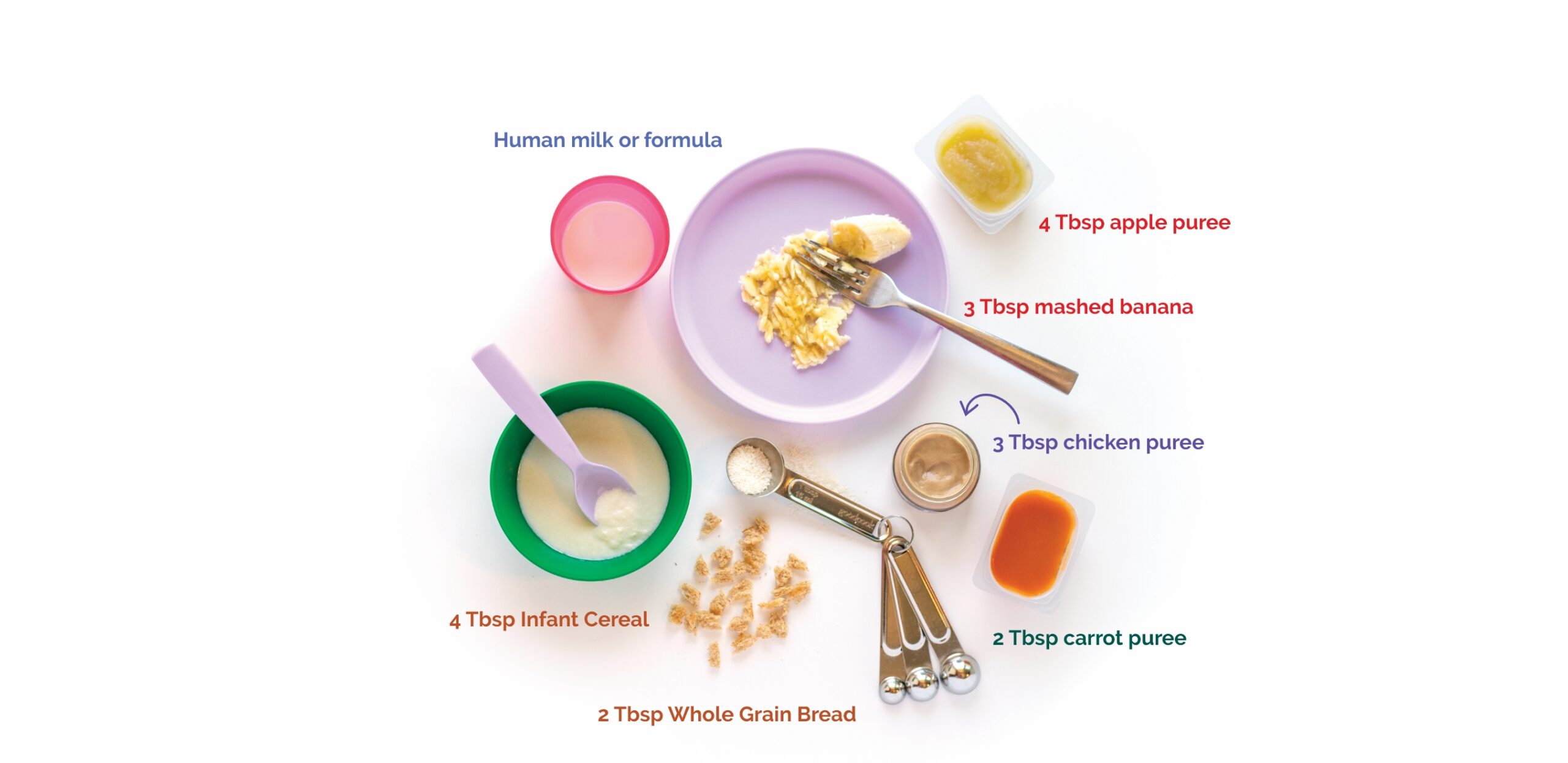
    Feeding a 6-7 Month Old

    Feed solids with a spoon and from a bowl, never from a bottle.
    Breast Milk
    Infant Formula
    Breast Milk

    Continue to nurse on-demand, about 4-6 times in 24 hours.

    Babies may experience a growth spurt around 6 months of age and may feed more often.

    Offer breast milk in a cup.

    Infant Formula

    24-32 oz. per day of infant formula.

    Offer formula in a cup.

    Grains
    Vegetables
    Fruits
    Proteins
    Grains
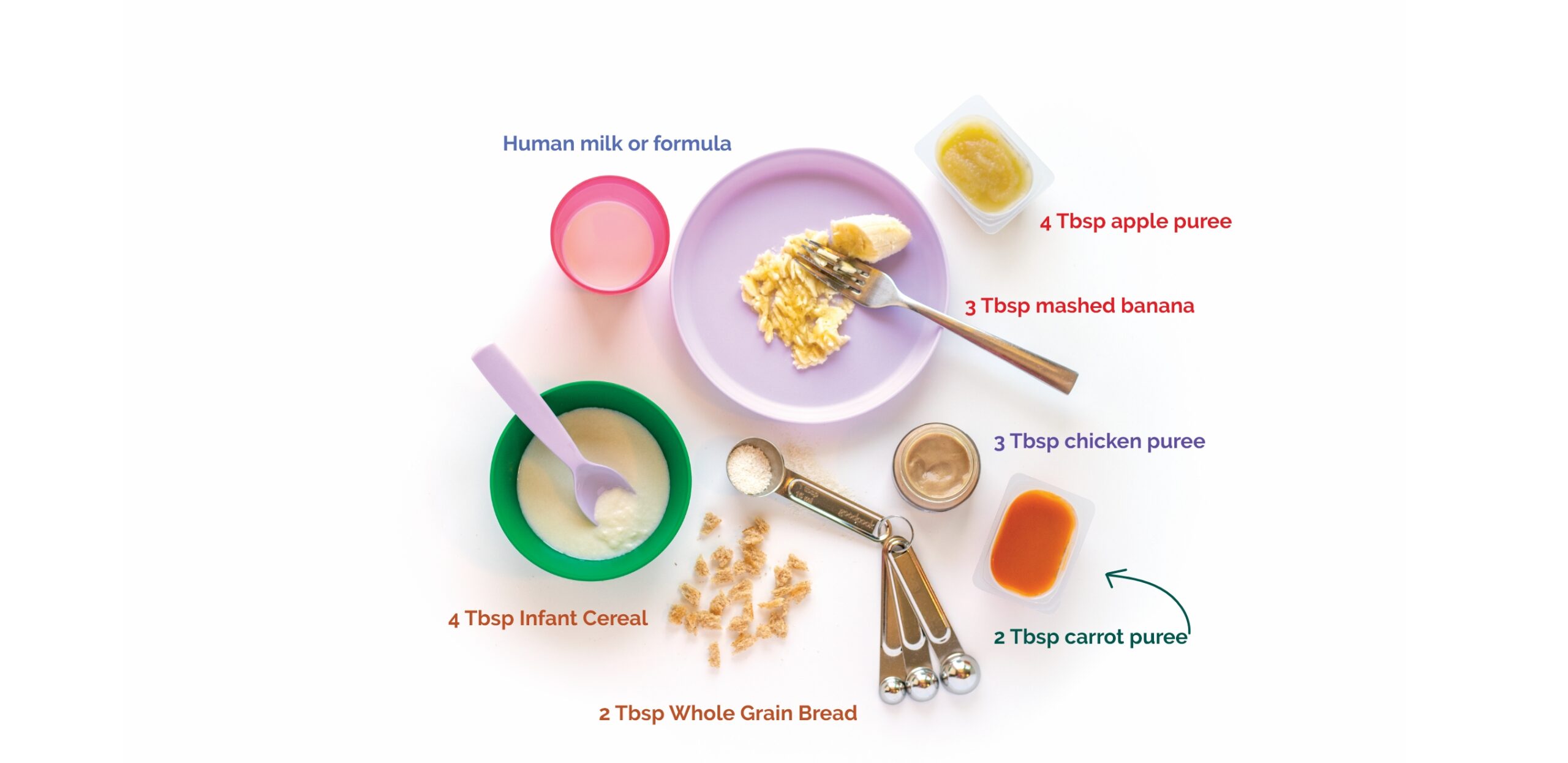
    Use breast milk or formula to prepare 2-4 Tbsp. iron-fortified infant cereal. Offer twice per day. 2-4 Tbsp. of small pieces of dry bread, baby crackers, and cereal. Offer twice per day.
    Grains
    Vegetables
    4-8 Tbsp. per day. Cooked, pureed, mashed vegetables.
    Vegetables
    Fruits
    2-4 Tbsp. per day. Cooked, pureed, mashed fruits. Applesauce, pureed peaches, or mashed banana.
    Fruits
    Proteins
    2-4 Tbsp. per day. Plain strained, mashed, or pureed meats, poultry, eggs, fish, or legumes. May add smooth whole milk yogurt. Thinned, smooth peanut or nut butter.
    Proteins

    Feeding a 10-12 Month Old

    Breast milk is the most important source of nutrition for your baby, even after you start offering solid foods.

    Breast Milk
    Infant Formula
    Breast Milk

    Continue to nurse on-demand, 3 or more times per day.

    Infant Formula

    16-24 oz. per day. Offer in a cup.

    Grains
    Vegetables
    Fruits
    Proteins
    Grains
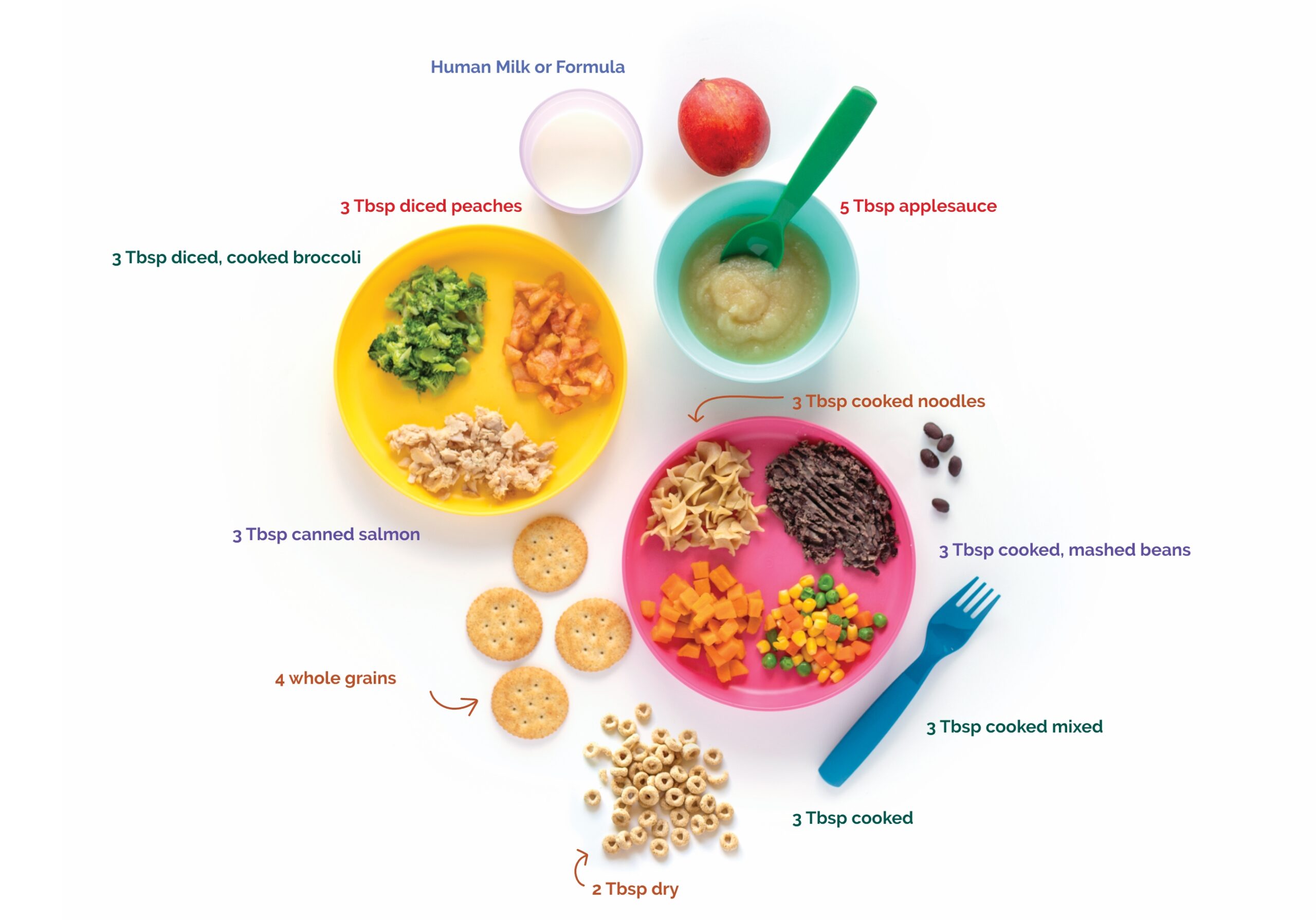
    4-8 Tbsp. per day. WIC approved infant cereals. Dry toast, crackers, bread, bagels, rolls, or plain muffins. Cooked rice and noodles.
    10-12 Month Grains
    Vegetables
    3-4 Tbsp. per day. Cooked bite-size vegetable pieces.
    10-12 Month Vegetables
    Fruits
    3-4 Tbsp. per day. Fresh fruits, peeled, and in bite-size portions.
    10-12 Month Fruits
    Proteins
    2-4 Tbsp. per day. Finely ground, chopped, or diced meats, poultry, eggs, fish, or cooked mashed beans. Thinned, smooth peanut butter.
    10-12 Month Proteins

    Feeding a 8-9 Month Old

    Feed solids with a spoon. Never put cereal in a bottle.

    Breast Milk
    Infant Formula
    Breast Milk

    Continue nursing on-demand, at least 4 times in 24 hours.

    If your baby seems less interested in nursing after you introduce solids, try nursing before you offer solids.

    Offer breast milk in a cup.

    Infant Formula

    24-32 oz. per day.

    Offer formula in a cup.

    Grains
    Vegetables
    Fruits
    Proteins
    Grains

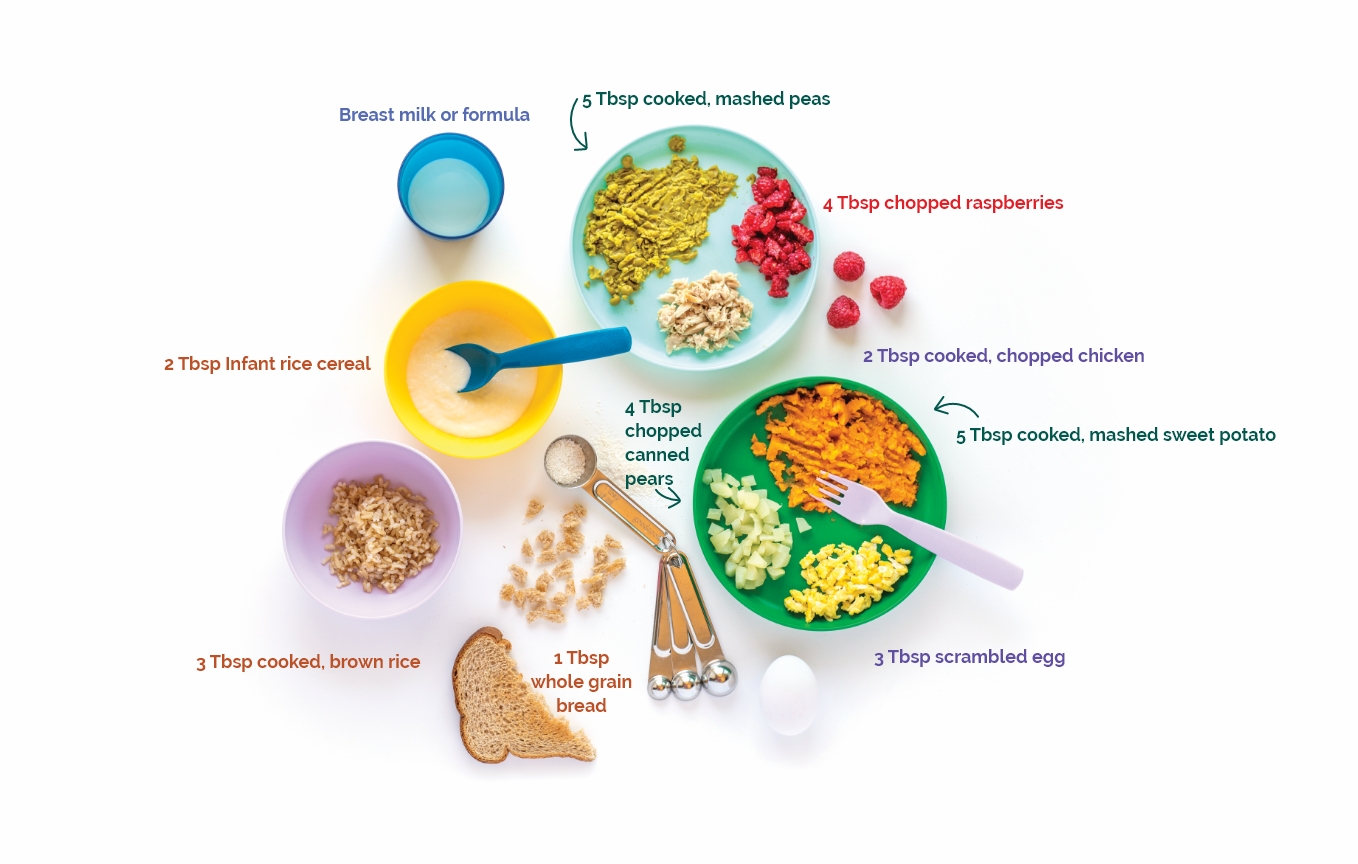
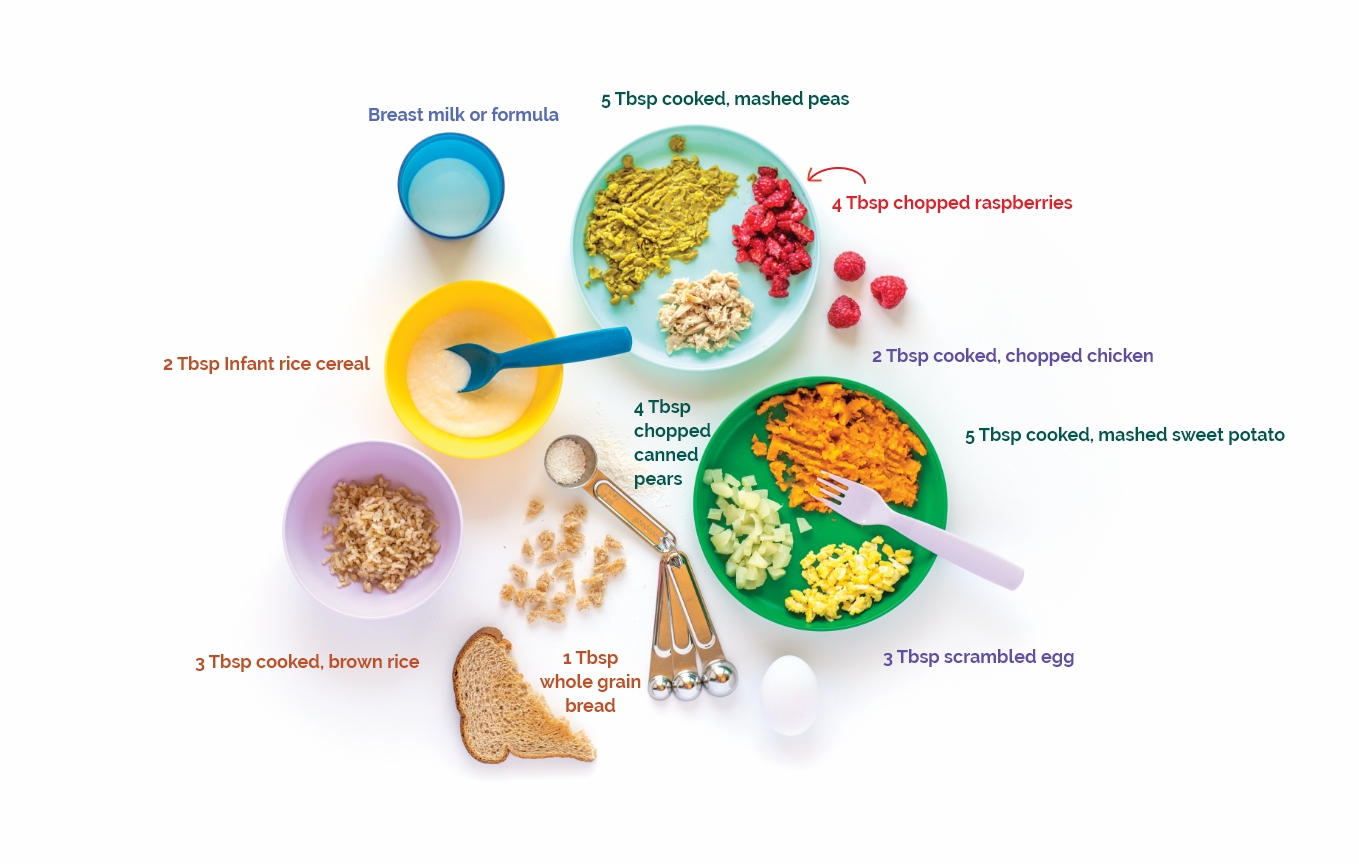
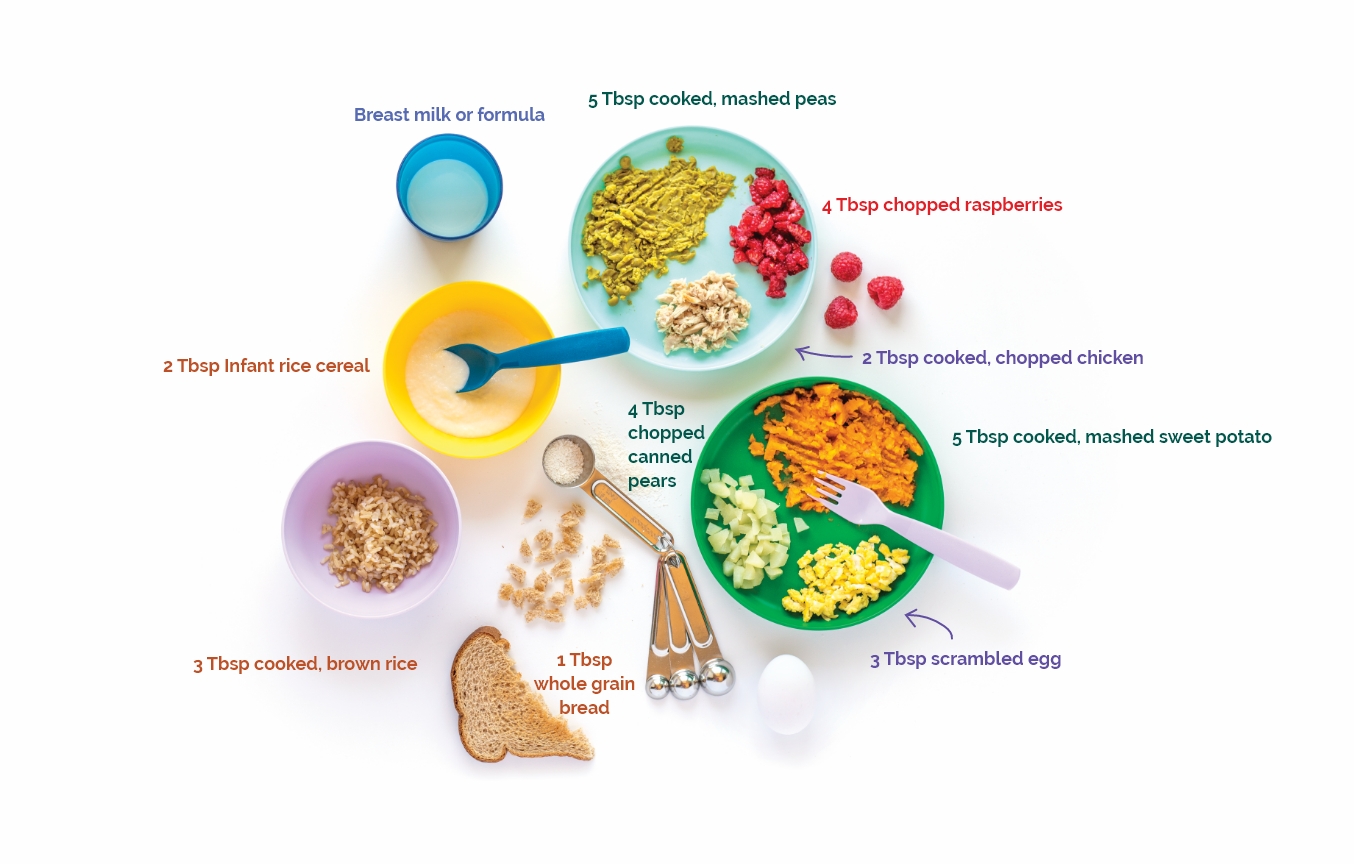
    4-8 Tbsp. per day.

    Plain iron-fortified infant cereals.

    Plain rice or pasta.

    Baby crackers, small pieces of bread, or soft tortillas.

    8-9 Month Grains
    Vegetables

    8-12 Tbsp. per day.

    Plain cooked vegetables, mashed with a fork.
    8-9 Month Vegetables
    Fruits

    8-12 Tbsp. per day.

    Peeled soft fruit in bite-size pieces.

    Unsweetened canned fruit.
    8-9 Month Fruits
    Proteins

    4-8 Tbsp. per day.

    Finely ground, chopped, or diced meats, poultry, eggs, fish, or cooked mashed beans.

    Cottage cheese or mild cheese.

    Thinned, smooth peanut or nut butter.
    8-9 Month Proteins
    I'm Hungry
    I'm Hungry

    Tips

    Mom new born home

    Breast milk and formula feeding:

    Around 2-3 weeks, 6 weeks, 3 months, and 6 months of age, babies may experience a growth spurt when they feed more often.

    As they grow babies can hold more milk, so feedings may become further apart and take less time.

    To prevent choking, always hold your baby when feeding. Never prop up a bottle to feed.

    Start offering whole milk when your baby is one year old.

    The American Academy of Pediatrics recommends exclusive breastfeeding for the first six months and that breastfeeding continue for at least 12 months and beyond.

    feeding solid foods

    Feeding solid foods:

    Wait to offer solid foods until your baby:

    • Can sit up and hold up their own head.
    • Opens their mouth when they see food.
    • Can close their lips around a spoon.

    To prevent choking, always hold your baby when feeding. Never prop up a bottle to feed.

    Try one new food at a time. Wait 5 days before trying another new food to watch for allergies. Food allergies may include wheezing, rash, or diarrhea.

    Introduce peanut butter around 6 months. Spread a small, thin smear of peanut butter or nut butter thinly on a cracker.  Watch your baby for any reaction for the next 2 hours.

    Babies under one year should NOT have honey due to the risk of botulism. Also, babies should not have foods that can cause choking like nuts or whole grapes.

    All babies are different. Talk with WIC or your baby’s healthcare provider about your baby’s needs.

    Feeding Cues

    I'm Hungry
    I'm Full
    I'm Hungry
    • Stirring
      Stirring
    • Mouth opening
      Mouth opening
    • Turning head seeking/rooting
      Turning head seeking/rooting
    I'm Full
    • Releases or falls off
      Releases or “falls off”
    • Turns away
      Turns away
    • Relaxes and opens fists
      Relaxes and opens fists

    Feeding a 4-5 Month Old

    Before teeth come in, wipe gums with a soft, clean wash cloth after each feeding, especially before bed.

    Breast Milk
    Infant Formula
    Breast Milk

    Nurse your baby on-demand, at least 7-9 times in 24 hours.

    When your baby starts teething, they may want to nurse more often.

    Infant Formula

    25-45 oz in 24 hours.

    Your baby needs about 4-6 oz of iron-fortified formula every 3-4 hours.

    Your baby may start to feed on a schedule. Instead of focusing on fixed amounts, let your baby tell you when they have had enough.

    I'm Hungry
    I'm Hungry

    Feeding a 0-3 Month Old

    Newborns have tiny tummies and need to be fed often. In the first few weeks, you may need to wake your baby to feed if they sleep longer than 4 hours.

    Growth Spurts

    Many babies are fussy during a growth spurt and will want to nurse longer and more often. This is called cluster feeding. This is your baby’s way of helping you increase your milk supply so that you can keep up with their needs. Remember, the more your baby nurses, the more milk your body makes.

    Growth spurts can happen at any time, and every baby is different.

    They often happen at these ages:

    two-three-weeks

    2 to 3 Weeks

    6 Weeks

    three-months

    3 Months

    six-months

    6 Months

    Breast Milk
    Infant Formula
    Breast Milk

    Breastfeed 8-12 times in 24 hours to help your newborn stay healthy.

    Nurse on-demand and when your newborn shows signs of hunger, such as sucking on hands or smacking lips.

    Infant Formula

    In the first few days, newborns need 2-3 oz. of iron-fortified infant formula every 3-4 hours.

    By the end of the first month, your newborn needs about 4 oz. every 4 hours.

    Feed on-demand and when your newborn shows signs of hunger.

    What foods can I get?

    Authorized Food List
    Authorized Food List

    Where can I shop?